

- Warsh’s monetarist leanings suggest the Fed’s focus may shift from managing the price of money via rates to controlling the supply of money through a smaller balance sheet
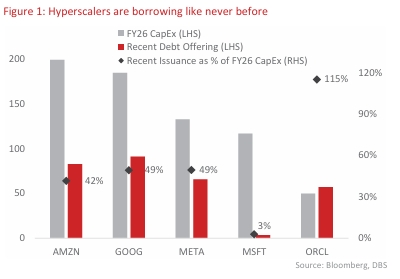
- Unlike the post-GFC era, today’s excess reserves sit alongside price-insensitive borrowers — the US government and AI hyperscalers — raising the risk that liquidity feeds inflation
- A maturity-matching strategy could reverse Operation Twist by reinvesting maturing Treasuries into front-end bills, increasing long-end supply and steepening the yield curve
- Markets may be right on Warsh’s anti-inflation resolve but wrong on the transmission channel, with quantitative tightening potentially doing more of the work than policy-rate hikes
- Portfolio duration should stay disciplined: avoid ultra-longs, keep blended duration around 5-7 years, and favour short-duration IG credit if front-end hike pricing proves excessive
Related Insights
- Research Library24 Jul 2026
- Malaysia: Solid fundamentals anchor financial market confidence 24 Jul 2026
- FX Tactical Ideas: Event Risks Ahead for USD24 Jul 2026

Flattening or steepening? Kevin Warsh in his first meeting as Fed Chair vowed to fight inflation and deliver price stability, and the markets rewarded him with credibility – short-end rates rose in anticipation of the hawkish pivot, while long-end rates declined on his resolve. Does curve flattening under the new Warsh regime favour a pivot to longer duration portfolios? We caution against this and propose that steepening risks are still very much on the cards given Warsh’s long-held views of monetary policy; investors should not be lulled into duration complacency with this recent yield curve “head fake”.
Warsh’s core monetarist views of QE and the Fed balance sheet are namely (a) excessive money supply stokes inflation, and that (b) QE encourages extravagant government spending by effectively monetising their debt. We think it best to quote him at this point on the matter:
"I think inflation comes about when the government prints too much - by which I mean the central bank and broadly speaking the government spends too much."
- Kevin Warsh, during his Apr 2026 Senate confirmation hearing
Massive rounds of QE post-GFC did not raise prices. “But wait, Warsh is wrong” quips the sharp-eyed observer. “QE did not stoke inflation after the GFC.” While it is true that y/y US Core PCE averaged a paltry c.1.5% in the 2008 to 2014 period where the Fed was conducting QE, one must be cognisant of the limitations of monetary transmission in that era to understand why. QE created a regime of excess bank reserves, which increased the ability of banks to lend on credit – but not the willingness. The post-GFC era was one of low willingness to both lend and borrow these excess reserves, due to (a) stringent bank capital and leverage ratio requirements restricting the risk-appetite of lenders, while (b) borrowers were unwilling to incur more debt having experienced a near financial meltdown of the global economy and were conversely paying down debt. Therefore, much of these excess reserves remained unborrowed; the increase in base money supply via QE did not translate to broad money supply growth in the real economy.
Download the PDF to read the full report which includes coverage on Credit, FX, Rates, and Thematics.
Topic
The information published by DBS Bank Ltd. (company registration no.: 196800306E) (“DBS”) is for information only. It is based on information or opinions obtained from sources believed to be reliable (but which have not been independently verified by DBS, its related companies and affiliates (“DBS Group”)) and to the maximum extent permitted by law, DBS Group does not make any representation or warranty (express or implied) as to its accuracy, completeness, timeliness or correctness for any particular purpose. Opinions and estimates are subject to change without notice. The publication and distribution of the information does not constitute nor does it imply any form of endorsement by DBS Group of any person, entity, services or products described or appearing in the information. Any past performance, projection, forecast or simulation of results is not necessarily indicative of the future or likely performance of any investment or securities. Foreign exchange transactions involve risks. You should note that fluctuations in foreign exchange rates may result in losses. You may wish to seek your own independent financial, tax, or legal advice or make such independent investigations as you consider necessary or appropriate.
The information published is not and does not constitute or form part of any offer, recommendation, invitation or solicitation to subscribe to or to enter into any transaction; nor is it calculated to invite, nor does it permit the making of offers to the public to subscribe to or enter into any transaction in any jurisdiction or country in which such offer, recommendation, invitation or solicitation is not authorised or to any person to whom it is unlawful to make such offer, recommendation, invitation or solicitation or where such offer, recommendation, invitation or solicitation would be contrary to law or regulation or which would subject DBS Group to any registration requirement within such jurisdiction or country, and should not be viewed as such. Without prejudice to the generality of the foregoing, the information, services or products described or appearing in the information are not specifically intended for or specifically targeted at the public in any specific jurisdiction.
The information is the property of DBS and is protected by applicable intellectual property laws. No reproduction, transmission, sale, distribution, publication, broadcast, circulation, modification, dissemination, or commercial exploitation such information in any manner (including electronic, print or other media now known or hereafter developed) is permitted.
DBS Group and its respective directors, officers and/or employees may have positions or other interests in, and may effect transactions in securities mentioned and may also perform or seek to perform broking, investment banking and other banking or financial services to any persons or entities mentioned.
To the maximum extent permitted by law, DBS Group accepts no liability for any losses or damages (including direct, special, indirect, consequential, incidental or loss of profits) of any kind arising from or in connection with any reliance and/or use of the information (including any error, omission or misstatement, negligent or otherwise) or further communication, even if DBS Group has been advised of the possibility thereof.
The information is not intended for distribution to, or use by, any person or entity in any jurisdiction or country where such distribution or use would be contrary to law or regulation. The information is distributed (a) in Singapore, by DBS Bank Ltd.; (b) in China, by DBS Bank (China) Ltd; (c) in Hong Kong, by DBS Bank (Hong Kong) Limited; (d) in Taiwan, by DBS Bank (Taiwan) Ltd; (e) in Indonesia, by PT DBS Indonesia; and (f) in India, by DBS Bank Ltd, Mumbai Branch.
Related Insights
- Research Library24 Jul 2026
- Malaysia: Solid fundamentals anchor financial market confidence 24 Jul 2026
- FX Tactical Ideas: Event Risks Ahead for USD24 Jul 2026
Related Insights
- Research Library24 Jul 2026
- Malaysia: Solid fundamentals anchor financial market confidence 24 Jul 2026
- FX Tactical Ideas: Event Risks Ahead for USD24 Jul 2026