

Related Insights
- Research Library24 Jul 2026
- Malaysia: Solid fundamentals anchor financial market confidence 24 Jul 2026
- FX Tactical Ideas: Event Risks Ahead for USD24 Jul 2026

The art of the deal? “When the facts change, I change my mind. What do you do, sir?” John Maynard Keynes, the great 20th century economist, is often credited with this saying which aptly captures the mood in financial markets today. Events of the past 18 months have unveiled several inconvenient truths which necessitate investors to reassess the basic assumptions in portfolio construction. Recall that Trump won his second presidency on the premise that he would stop unnecessary wars, lower cost of living, and reduce America’s fiscal profligacy. Investors, in turn, positioned their portfolios along those lines. But the direct opposite has happened since, with the administration waging military campaigns in Middle East and Venezuela, while the One Big Beautiful Bill adds trillions to the national debt.
The Iranian war debacle, a campaign with no clear strategic endgame, is going down in history as one of the biggest strategic blunders of the US military. Aside from massive financial costs, the other lasting damage the war has created is the rupture within NATO – a situation which brings into question whether American security guarantees can even be relied upon anymore. Right now, negotiation with Iran for a peace deal is still ongoing and looking at the state of play, it is clear that Tehran has the leverage and holds the cards. Iran’s nuclear programme will be a thorny issue that is unlikely to see concrete resolution in the ongoing negotiations.
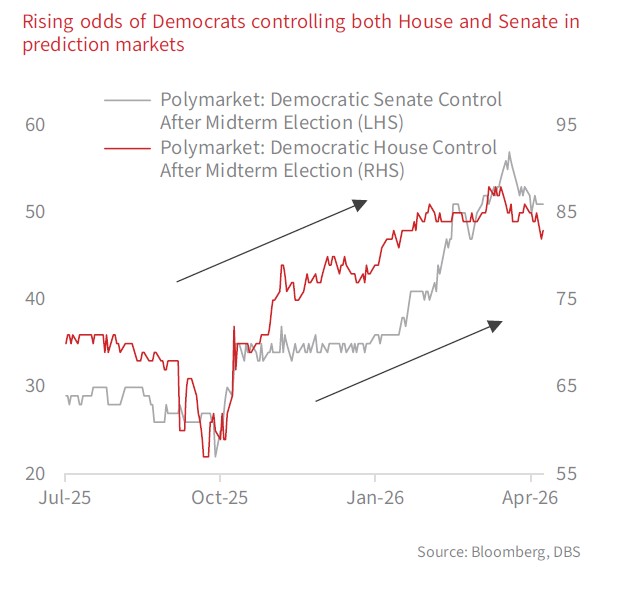
So why is Trump willing to accept a bad deal? The truth of the matter is, there is no better optionality. Faced with plummeting popularity, surging gasoline prices, and a looming midterm election, things can’t get any worse, and the price of dragging on with a meaningless conflict will be larger. Resumption of military strikes is not feasible either as Iran’s asymmetric counterair campaign through clever usage of low-cost drones has changed the war dynamics. A bad deal, it seems, is the only viable option left on the table now.
The Aftermath: Structurally higher inflation. The Pentagon has guided that the war will cost USD25bn so far. But such an assumption is based on the historical cost of weapons and does not reflect the reality of replacing them at current prices. This, coupled with the cost of repairing the destroyed military bases in allied countries, will increase the damage significantly. Based on the estimates of Harvard Professor Linda Bilmes, the war will cost closer to USD1tn in totality. Separately, the administration had asked Congress to boost US defence spending to USD1.5tn, the highest since WWII.
US fiscal deficits, coupled with elevated energy prices, suggests that investors are under-pricing inflation tail risks. Buoyed by AI optimism, equity investors are already off to the races. The AI capex cycle had rooms to run and with it, driving corporate earnings higher. We concur with this view. But portfolio downside protection matters. It makes sense to watch your downside at this point while equities are already pricing in an eventual end to the crisis and weaker oil prices. We believe investors will need to confront the following issues in the coming months:
- Higher-for-longer oil price and rising central bank hawkishness
- Rising equity-bonds correlations and the need for new safe havens
- The new capex supercycle
Download the PDF to read the full report which includes coverage on Credit, FX, Rates, and Thematics.
Topic
The information published by DBS Bank Ltd. (company registration no.: 196800306E) (“DBS”) is for information only. It is based on information or opinions obtained from sources believed to be reliable (but which have not been independently verified by DBS, its related companies and affiliates (“DBS Group”)) and to the maximum extent permitted by law, DBS Group does not make any representation or warranty (express or implied) as to its accuracy, completeness, timeliness or correctness for any particular purpose. Opinions and estimates are subject to change without notice. The publication and distribution of the information does not constitute nor does it imply any form of endorsement by DBS Group of any person, entity, services or products described or appearing in the information. Any past performance, projection, forecast or simulation of results is not necessarily indicative of the future or likely performance of any investment or securities. Foreign exchange transactions involve risks. You should note that fluctuations in foreign exchange rates may result in losses. You may wish to seek your own independent financial, tax, or legal advice or make such independent investigations as you consider necessary or appropriate.
The information published is not and does not constitute or form part of any offer, recommendation, invitation or solicitation to subscribe to or to enter into any transaction; nor is it calculated to invite, nor does it permit the making of offers to the public to subscribe to or enter into any transaction in any jurisdiction or country in which such offer, recommendation, invitation or solicitation is not authorised or to any person to whom it is unlawful to make such offer, recommendation, invitation or solicitation or where such offer, recommendation, invitation or solicitation would be contrary to law or regulation or which would subject DBS Group to any registration requirement within such jurisdiction or country, and should not be viewed as such. Without prejudice to the generality of the foregoing, the information, services or products described or appearing in the information are not specifically intended for or specifically targeted at the public in any specific jurisdiction.
The information is the property of DBS and is protected by applicable intellectual property laws. No reproduction, transmission, sale, distribution, publication, broadcast, circulation, modification, dissemination, or commercial exploitation such information in any manner (including electronic, print or other media now known or hereafter developed) is permitted.
DBS Group and its respective directors, officers and/or employees may have positions or other interests in, and may effect transactions in securities mentioned and may also perform or seek to perform broking, investment banking and other banking or financial services to any persons or entities mentioned.
To the maximum extent permitted by law, DBS Group accepts no liability for any losses or damages (including direct, special, indirect, consequential, incidental or loss of profits) of any kind arising from or in connection with any reliance and/or use of the information (including any error, omission or misstatement, negligent or otherwise) or further communication, even if DBS Group has been advised of the possibility thereof.
The information is not intended for distribution to, or use by, any person or entity in any jurisdiction or country where such distribution or use would be contrary to law or regulation. The information is distributed (a) in Singapore, by DBS Bank Ltd.; (b) in China, by DBS Bank (China) Ltd; (c) in Hong Kong, by DBS Bank (Hong Kong) Limited; (d) in Taiwan, by DBS Bank (Taiwan) Ltd; (e) in Indonesia, by PT DBS Indonesia; and (f) in India, by DBS Bank Ltd, Mumbai Branch.
Related Insights
- Research Library24 Jul 2026
- Malaysia: Solid fundamentals anchor financial market confidence 24 Jul 2026
- FX Tactical Ideas: Event Risks Ahead for USD24 Jul 2026
Related Insights
- Research Library24 Jul 2026
- Malaysia: Solid fundamentals anchor financial market confidence 24 Jul 2026
- FX Tactical Ideas: Event Risks Ahead for USD24 Jul 2026