
The Cost of Golf, or the Cost of Health?
if you liked doing something before retirement you’re going to want to keep doing it.
At some point or other most people make a mental note to try something later when they have more time. The doers execute and the procrastinators leave it on a bucket list. Don’t label yourself just yet but do consider what it costs to maintain your interests, whether current or new, in retirement.
Looking at the differences between attitudes and behaviours among people who are about to retire and those retired, UK-based research by Ipsos surmises there is a high likelihood that what interests the about-to-retire segment today will continue to interest them in retirement.
The results find that the current silver-hair generation brings a new set of values with them into retirement compared to the generation before. Accustomed to overseas travel, access to new technology and having to pay premium for high-end products and services, comparing the two target groups’ attitudes towards leisure reveals results are similar. So if you liked doing something before retirement you’re going to want to keep doing it.
Club Culture
Clubs expose you to other like-minded people who, like you, are interested in either the exclusiveness of the membership, water sports, cricket, football, gaming activities, networking or simply a quite place to read the paper. In Hong Kong, belonging to a club gives you a community, but for a fee – and this could be prohibitive. So, what will it cost?
Picture This
Photography and travel top the list for most active retirees because the conundrum of having money and no time, or time and no money has been solved. Now the question becomes where to go. Quick jaunts across Asia could put you back HK$4,000 for packages to Osaka, Seoul or Tokyo, and upwards of $13,000 to $17,000 for flight-only to North America in economy.
If you can restrict your picture-taking efforts to what you can do with your mobile phone, or analogue lomography, it’s pretty affordable. But for professional-level camera equipment, the sky’s the limit, with the body alone for an entry level SLR Canon costing $6,500, and the professional EOS 5D Mark III reaching upwards of $27,000 (again, body only).
Fit For Life
Use it or lose it is the takeaway from research conducted by Walter M. Bortz II, showing the true rate of ageing in fit people is 0.5% per year compared to 2% for the unfit. Thus fitness helps slow ageing – which begins at 25 and accelerates at 75 – by 1.5% a year. More importantly, a fit person of 70 is biologically the same as an unfit person of 40.
Across Asia Pacific, those about to retire place utmost importance on maintaining their health, says Derek Tan, Research Director, Ipsos Hong Kong. Drawing on data from Ipsos’s most recent annual PAX survey, a reference study of Asia’s mass affluent individuals (top 20% of the population), he notes, “They are also willing to spend extra money on personal as well as their family’s health and wellbeing. This explains why they actively engage in sports – even high energy sports such as soccer/football, basketball/netball, tennis, cricket, baseball/softball and, of course, golf.”
But it’s not all about staying healthy for the sake of being healthy, but rather about spending quality time with family and friends, says Tan, and engaging in leisure activities such as watching a movie, visiting a museum/art gallery, watching a live drama or listening to a concert are great ways to stimulate the brain.
Hong Kong offers much in the way of sporting options and many in the city make use of both the natural environment and facilities to stay fit. There really is no excuse for becoming a couch-potato when you retire — but do make sure that you pick something that suits your pocket.
Ideas for staying in motion:
Activity / Cost
Tai chi – Free
Running – Cost of a pair of running shoes
Walking – Free
Hiking – Cost of a few snacks, a hat to keep your face shaded, and some sun block
Dancing – Lessons can start from around $200 but can be much more
Yoga – Cost of the mat if you practice alone, otherwise from $200-250 drop-in fee to $800 a month for membership
Swimming – Cost of a bathing suit. If your building has no pool, and beaches or public pools are not accessible.
Badminton – Cost of a racket
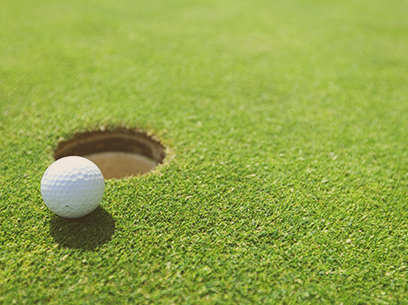
Golf – Entrance fee to club, cost of clubs and green fees
Aside from physical activity and social interaction, other things you should look for in a hobby are activities which are intellectually stimulating and emotionally satisfying. So don’t shy away from digital brain-training games.
Games console giants Nintendo and Sony are benefiting from brain training both young and older minds who want to be challenged, but there is no need to invest in one of the latest models to stay sharp (unless you want to impress the grandkids at the same time), both chess and mahjong are excellent for exercising cognitive and memory abilities.
Emotionally you want to be passionate about what you’re doing so that you’re not only engaged – and more likely to keep doing it – but you also benefit from low stress, improved overall well-being and high levels of satisfaction, which are all good things when you’re doing what you love and fending off age-related conditions.
Remarks: Costs do not account for inflation. Prices are for reference only and are in HK dollars.
At some point or other most people make a mental note to try something later when they have more time. The doers execute and the procrastinators leave it on a bucket list. Don’t label yourself just yet but do consider what it costs to maintain your interests, whether current or new, in retirement.
Looking at the differences between attitudes and behaviours among people who are about to retire and those retired, UK-based research by Ipsos surmises there is a high likelihood that what interests the about-to-retire segment today will continue to interest them in retirement.
The results find that the current silver-hair generation brings a new set of values with them into retirement compared to the generation before. Accustomed to overseas travel, access to new technology and having to pay premium for high-end products and services, comparing the two target groups’ attitudes towards leisure reveals results are similar. So if you liked doing something before retirement you’re going to want to keep doing it.
Club Culture
Clubs expose you to other like-minded people who, like you, are interested in either the exclusiveness of the membership, water sports, cricket, football, gaming activities, networking or simply a quite place to read the paper. In Hong Kong, belonging to a club gives you a community, but for a fee – and this could be prohibitive. So, what will it cost?
Picture This
Photography and travel top the list for most active retirees because the conundrum of having money and no time, or time and no money has been solved. Now the question becomes where to go. Quick jaunts across Asia could put you back HK$4,000 for packages to Osaka, Seoul or Tokyo, and upwards of $13,000 to $17,000 for flight-only to North America in economy.
If you can restrict your picture-taking efforts to what you can do with your mobile phone, or analogue lomography, it’s pretty affordable. But for professional-level camera equipment, the sky’s the limit, with the body alone for an entry level SLR Canon costing $6,500, and the professional EOS 5D Mark III reaching upwards of $27,000 (again, body only).
Fit For Life
Use it or lose it is the takeaway from research conducted by Walter M. Bortz II, showing the true rate of ageing in fit people is 0.5% per year compared to 2% for the unfit. Thus fitness helps slow ageing – which begins at 25 and accelerates at 75 – by 1.5% a year. More importantly, a fit person of 70 is biologically the same as an unfit person of 40.
Across Asia Pacific, those about to retire place utmost importance on maintaining their health, says Derek Tan, Research Director, Ipsos Hong Kong. Drawing on data from Ipsos’s most recent annual PAX survey, a reference study of Asia’s mass affluent individuals (top 20% of the population), he notes, “They are also willing to spend extra money on personal as well as their family’s health and wellbeing. This explains why they actively engage in sports – even high energy sports such as soccer/football, basketball/netball, tennis, cricket, baseball/softball and, of course, golf.”
But it’s not all about staying healthy for the sake of being healthy, but rather about spending quality time with family and friends, says Tan, and engaging in leisure activities such as watching a movie, visiting a museum/art gallery, watching a live drama or listening to a concert are great ways to stimulate the brain.
Hong Kong offers much in the way of sporting options and many in the city make use of both the natural environment and facilities to stay fit. There really is no excuse for becoming a couch-potato when you retire — but do make sure that you pick something that suits your pocket.
Ideas for staying in motion:
Activity / Cost
Tai chi – Free
Running – Cost of a pair of running shoes
Walking – Free
Hiking – Cost of a few snacks, a hat to keep your face shaded, and some sun block
Dancing – Lessons can start from around $200 but can be much more
Yoga – Cost of the mat if you practice alone, otherwise from $200-250 drop-in fee to $800 a month for membership
Swimming – Cost of a bathing suit. If your building has no pool, and beaches or public pools are not accessible.
Badminton – Cost of a racket
Golf – Entrance fee to club, cost of clubs and green fees
Aside from physical activity and social interaction, other things you should look for in a hobby are activities which are intellectually stimulating and emotionally satisfying. So don’t shy away from digital brain-training games.
Games console giants Nintendo and Sony are benefiting from brain training both young and older minds who want to be challenged, but there is no need to invest in one of the latest models to stay sharp (unless you want to impress the grandkids at the same time), both chess and mahjong are excellent for exercising cognitive and memory abilities.
Emotionally you want to be passionate about what you’re doing so that you’re not only engaged – and more likely to keep doing it – but you also benefit from low stress, improved overall well-being and high levels of satisfaction, which are all good things when you’re doing what you love and fending off age-related conditions.
Remarks: Costs do not account for inflation. Prices are for reference only and are in HK dollars.